
Grid-based 3DMA GNSS with clustering and Doppler velocity using factor graph optimisation
The Journal of Navigation (2025)
Summary
Grid-based 3DMA GNSS combines candidate clustering, Doppler-derived velocity, and factor graph optimization to improve urban GNSS positioning in deep urban scenes.
Highlights
- Region-growing clustering separates multimodal 3DMA GNSS candidate locations before factor graph optimization.
- The paper evaluates static London data and a vehicular Canary Wharf experiment, comparing loosely coupled and hybrid-coupled FGO variants.
Figures
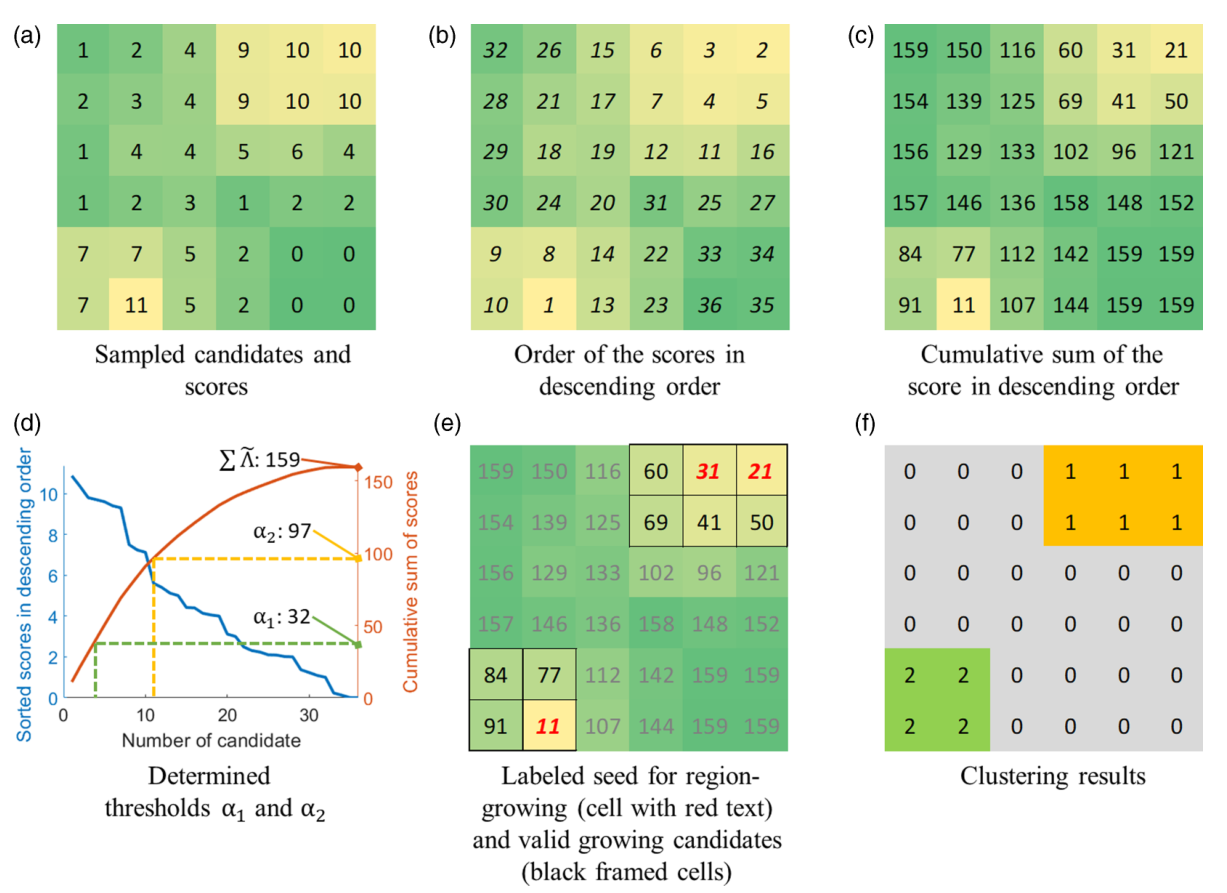
After candidate scores are computed, the paper uses region growing to split likely receiver locations into separate clusters instead of forcing a single candidate cloud.
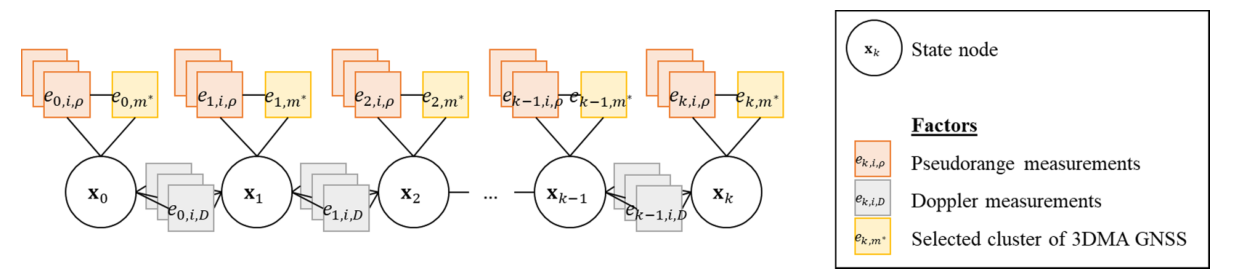
The selected cluster then becomes one of the measurement factors in a hybrid-coupled graph that also uses pseudorange and Doppler information.
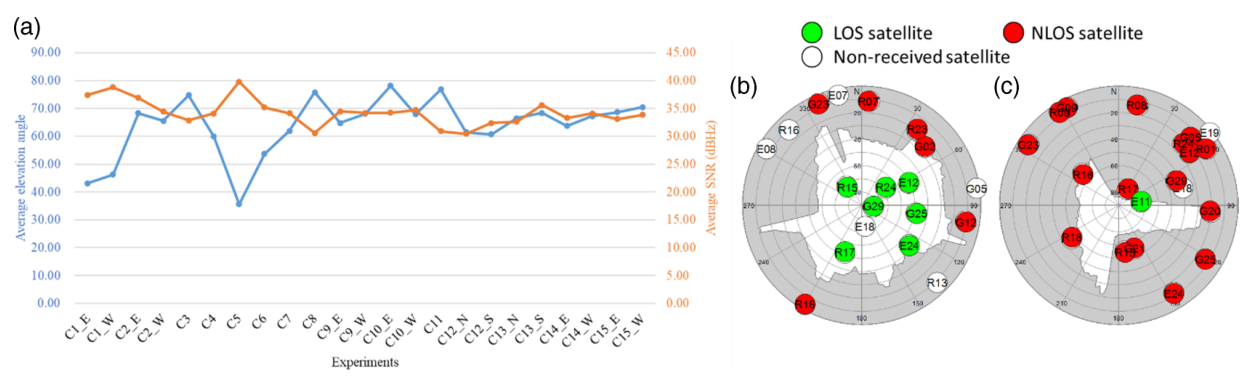
Before reporting accuracy, the paper documents the urban obstruction level and satellite visibility conditions used in the experiments.
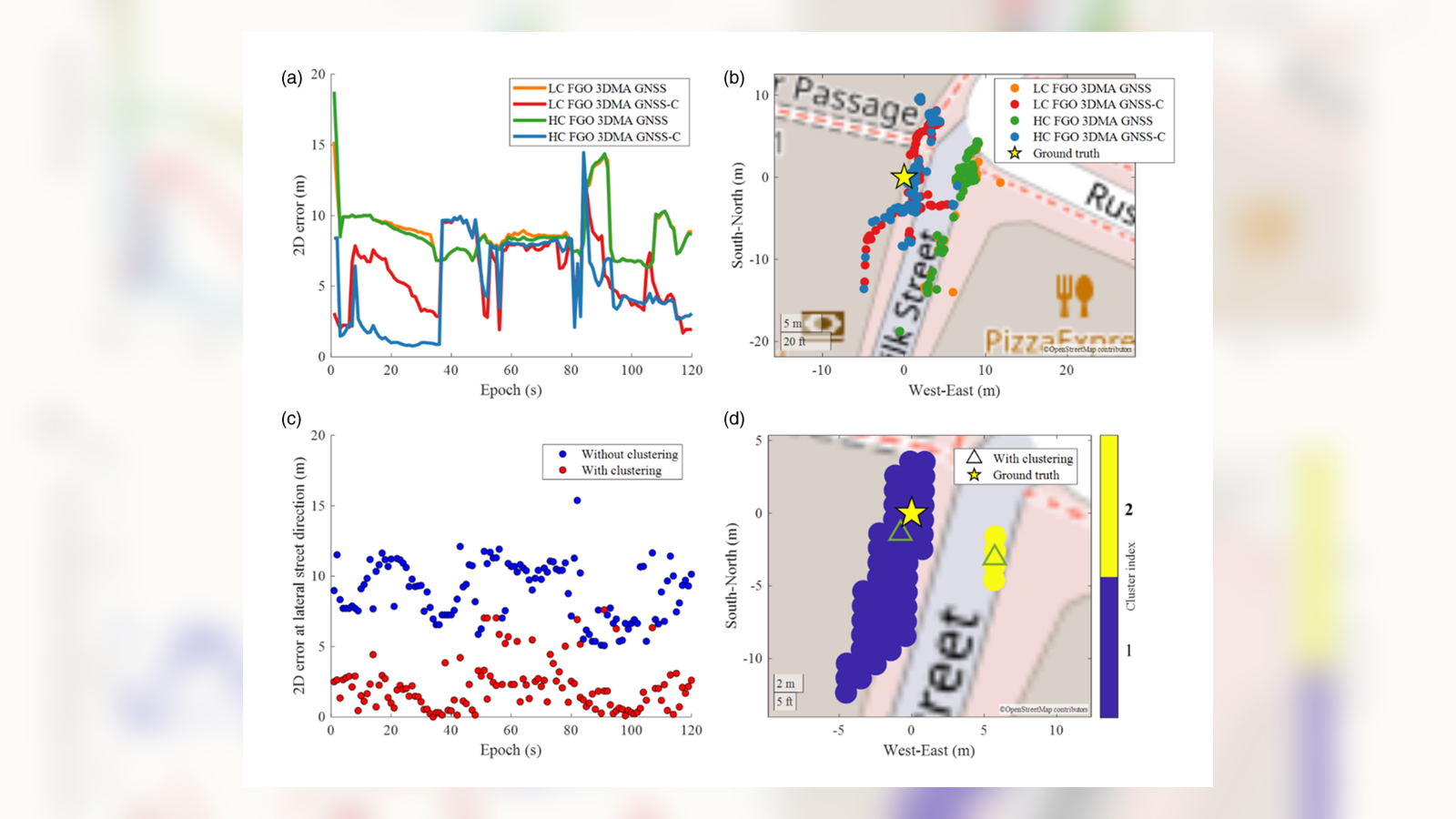
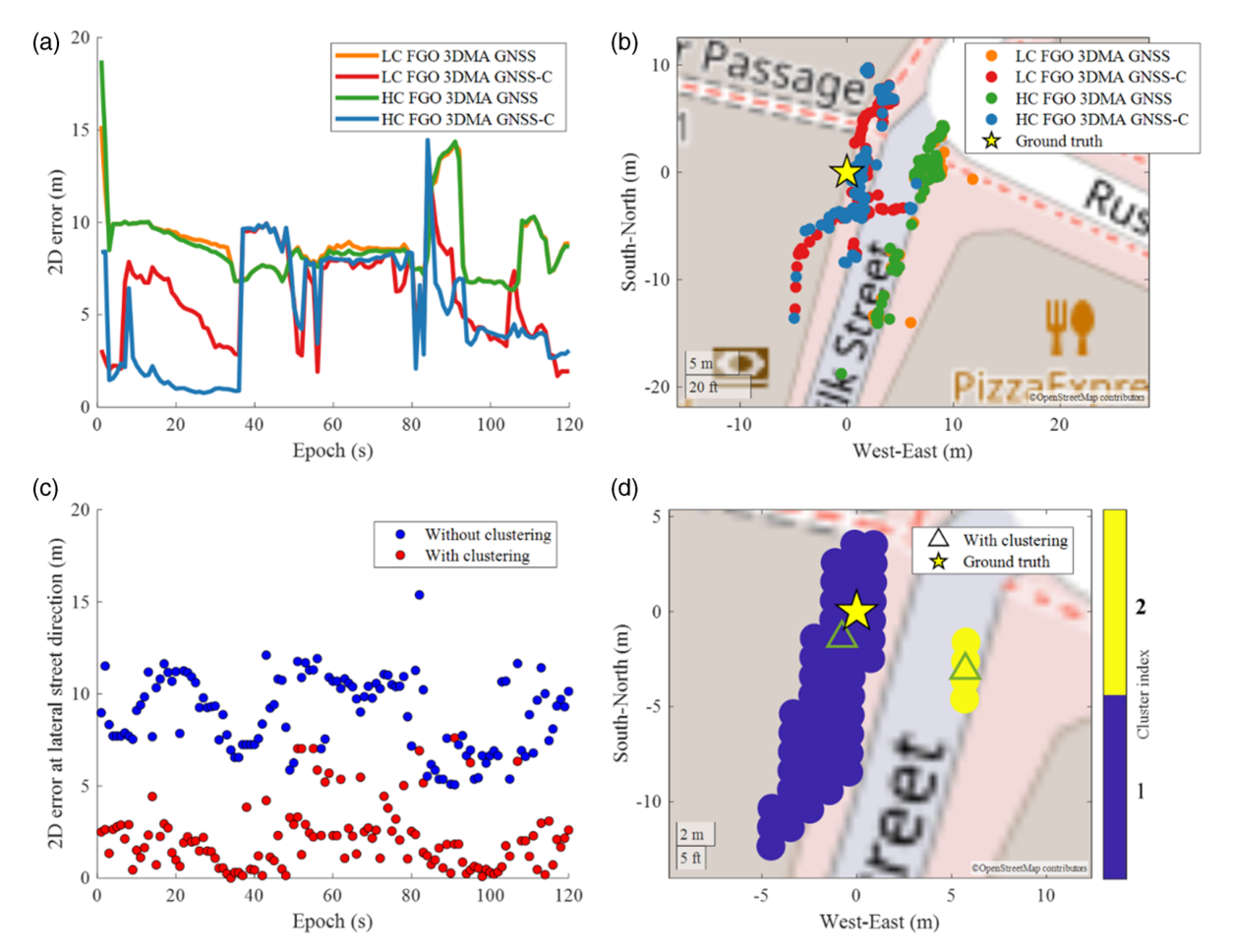
The static result shows how clustering reduces lateral street-direction error and separates competing candidate clusters near the true position.
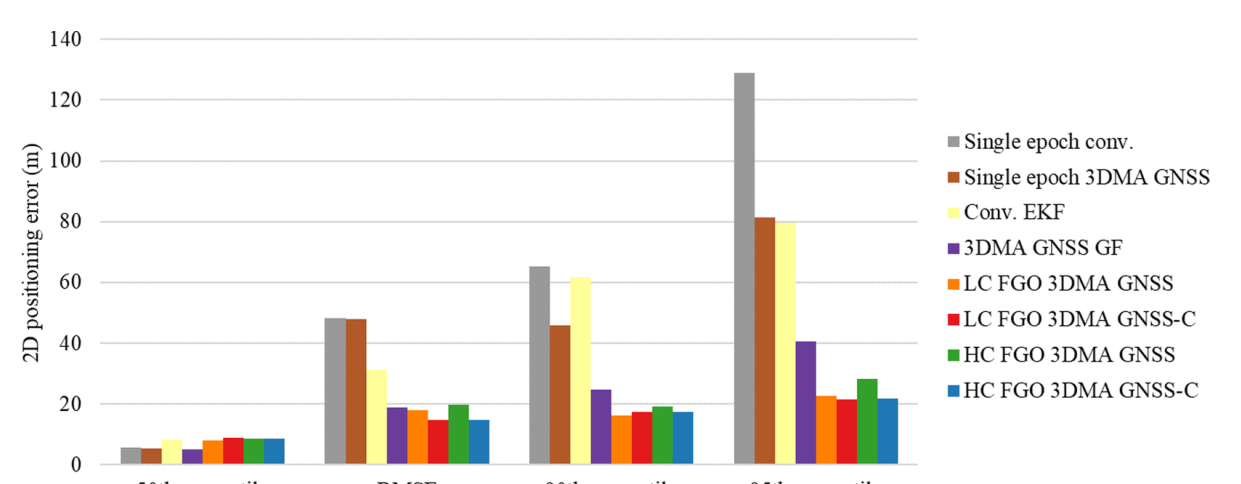
The vehicular summary extends the static findings to a dynamic route, comparing error percentiles across conventional, grid-filter, and FGO-based methods.